


At a glance
- Better local visibility: Content marketing helps your website show up for more relevant local searches and niche queries.
- More trust upfront: Helpful content builds credibility and reassures potential customers before they get in touch.
- Better quality enquiries: Answering real customer questions can attract more qualified leads and filter out poor-fit enquiries.
- Less reliance on social media: Website content keeps working over time and gives you a marketing asset you actually own.
- More value from each piece: One good blog or guide can be repurposed across your Google Business Profile, social media, and email.
- Long-term growth: Consistent content helps your website become a stronger business asset that brings in enquiries over time.
If you run a local or small business and have a website, chances are you’ve probably read or been told, “You need to do content marketing!”
Usually that comes with very little explanation of what content marketing actually means, how it works, and whether it’s worth your time – especially when you’re already so busy running your business.
To help you decide whether it’s worth investing in, I’ve put together this guide to explain the benefits in plain English – with practical examples from different types of local businesses, e.g. trades, salons, consultants, personal trainers, agencies and more.
Let’s start with the all-important first question: what actually is content marketing?
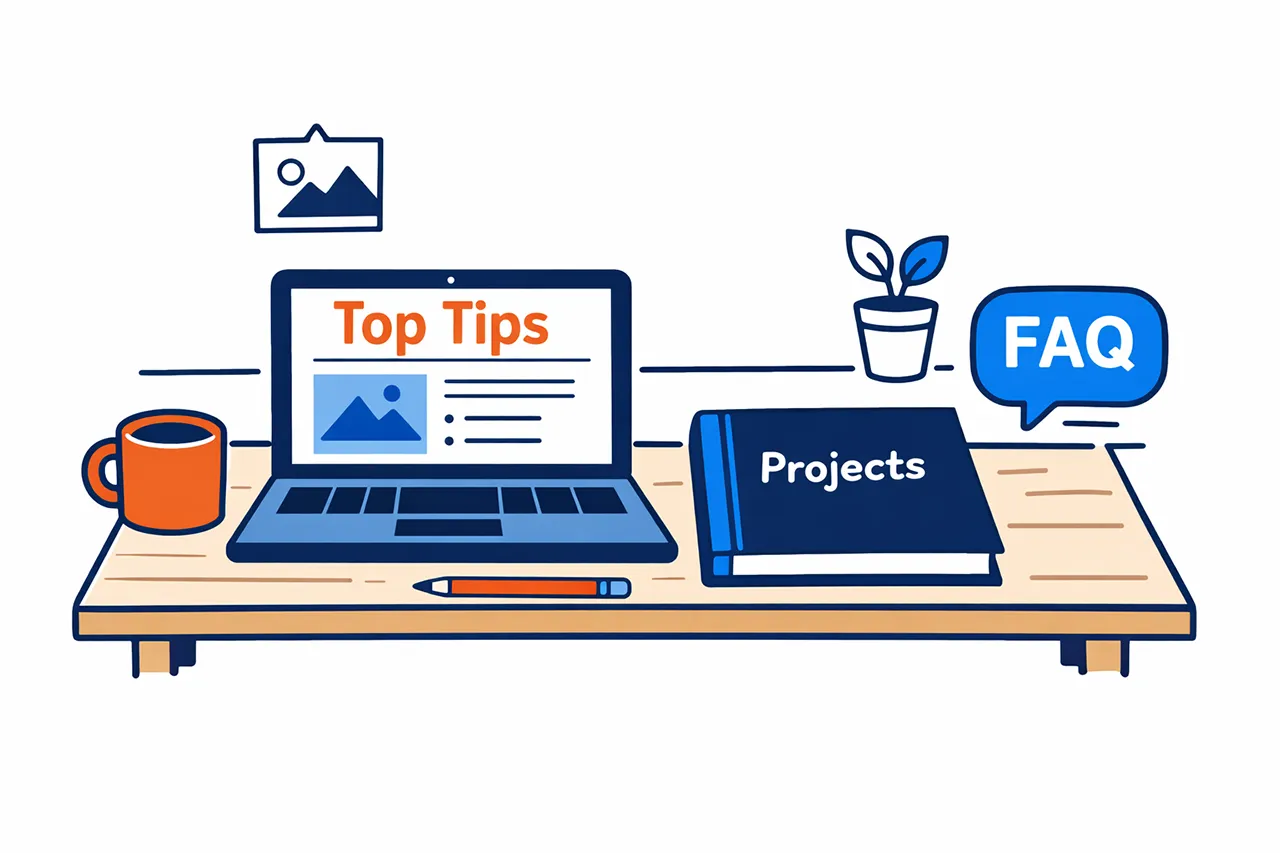
Content marketing is simply creating useful, relevant content on your website – things like blog posts, guides, tutorials, project/portfolio posts, case studies, FAQs and news updates – that helps people find you, trust you, and choose you.
It’s not about churning out a load of nonsense just for the sake of it. Because when done properly, content becomes a highly valuable long-term asset that:
- Improves your search engine optimisation (SEO) and local visibility
- Brings in more qualified enquiries
- Reduces time-wasting questions
- Helps you stand out without competing on price
- Keeps working to market your business long after it’s published
Now let’s get into the nitty-gritty of content marketing for local businesses.
What counts as content on a small business website?
When people hear the term “content”, they often just think of social media posts going out just to fill up news feeds.
But for your website, content is anything that helps a visitor understand what you do, see proof of your work, and make a decision to get in touch.
Common types of website content that work brilliantly for local businesses include:
Helpful content
- Blog posts – e.g. tips, advice, common mistakes, explainers
- How-to guides, tutorials, and step-by-step help
- FAQs answering real questions before someone books
Proof content
- Project/portfolio posts showing your work with context about your services
- Case studies – e.g. a real customer story: problem → process → result
Business updates
- News posts – e.g. new services, awards, changes, community involvement
- Seasonal posts relevant to your business – e.g. winter checklists, summer prep, tax year reminders
You don’t need everything, so don’t start feeling overwhelmed just by reading that list.
But even a simple plan – e.g. one or two quality posts per month – can build real momentum over time.
Why content marketing works especially well for local businesses
Big brands can throw money at advertising – whether that’s through Google Ads, billboards, sponsored social media posts, or TV and radio commercials – to get (and retain) new customers.
But local businesses often win by being:
- Visible in local searches
- Clearly trustworthy
- Easy to choose
- Easy to contact
Regularly creating quality content supports all four of those pillars.
Essentially, instead of relying on your homepage and a few service pages to do everything, content gives your website more entry points, more proof, and more reasons for someone to take the next step.
A quick myth to ignore: “I need to post all the time”
A lot of business owners avoid content marketing because they assume it means posting constantly.
So you’ll be glad to know it doesn’t.
For local businesses, consistency matters more than volume. One genuinely helpful post per month – especially if it answers real customer questions and links to your services – can build momentum over time.
Now let’s look at the 20 benefits of content marketing for local businesses.
1. It strengthens your local SEO – so you show up where it matters
For most local businesses, Google is still the main way new customers find you – especially when they need something soon or they’re ready to compare options.
That’s why it’s worth keeping search engine optimisation (SEO) at the heart of your website and content strategy – because it’s what helps your business appear higher up in search results when local customers are actively looking.
Regular content helps your website send clearer signals about what you do and where you do it, which makes it easier for Google (and other search engines, such as Bing) to match your business to local searches.
It also gives you opportunities to mention locations naturally – without crowbarring in place names everywhere (also known as keyword stuffing) – and to support the pages that actually generate enquiries and make you money: your core service pages.
For example, quality relevant content can support searches like:
- “Emergency plumber in Sidcup”
- “Hair salon in Bexleyheath”
- “Mortgage adviser for self-employed people in Kent”
- “Personal trainer near me”

2. It helps you rank for niche searches – which often produce the best leads
Your website’s main service pages usually target broader search terms relevant to your business, such as “electrician”, “physio”, or “beauty clinic”.
The issue here is that broad terms are incredibly competitive, and they don’t always reflect how real people search when they’re deciding.
Content helps you reach customers at the exact moment they’re searching – whether that’s a specific problem, a service detail, a “What does this cost?” question, or a “What should I do next?” concern.
These searches often have lower competition and higher intent, which means they can bring in better quality enquiries.
What niche searches look like for you depends entirely on your business, but some examples include:
- “How long does it take to replaster a room?”
- “Laser hair removal aftercare guide”
- “How much does a loft conversion in Kent cost?”
- “Sports massage for calf pain in runners”
- “Best accountant for contractors”
If your website answers those questions well, you become the obvious next step for the would-be customer.
3. It builds credibility – without you having to sell yourself
When someone lands on your website, they’re not just judging your services – they’re also weighing up whether you feel safe to contact. Helpful content builds trust quietly and naturally.
If you can explain things clearly, answer common questions, and show that you understand the customer’s situation, you instantly come across as more experienced and more professional than competitors with a thin brochure site.
This is especially important in industries where customers feel anxious or unsure, e.g. tradespeople, health and fitness, beauty, finance, and legal services.
In short, quality content provides reassurance before someone ever picks up the phone.
4. It shows your business is active and up to date
People are cautious: even if they like what they see, they’ll hesitate to get in touch if your website feels outdated.
A website that hasn’t changed in years can inadvertently signal that you’re either not active, not busy, or simply not up to date.
Whether it’s a news bulletin about recently completed jobs, or a blog about recent trends in your industry, fresh content is a simple way to show you’re operating, engaged, and improving.
This doesn’t mean posting constantly – but enough so that your website doesn’t look abandoned.
This removes customer doubt, making it easier for a visitor to become an enquiry.
5. It supports your Google Business Profile and makes it more valuable
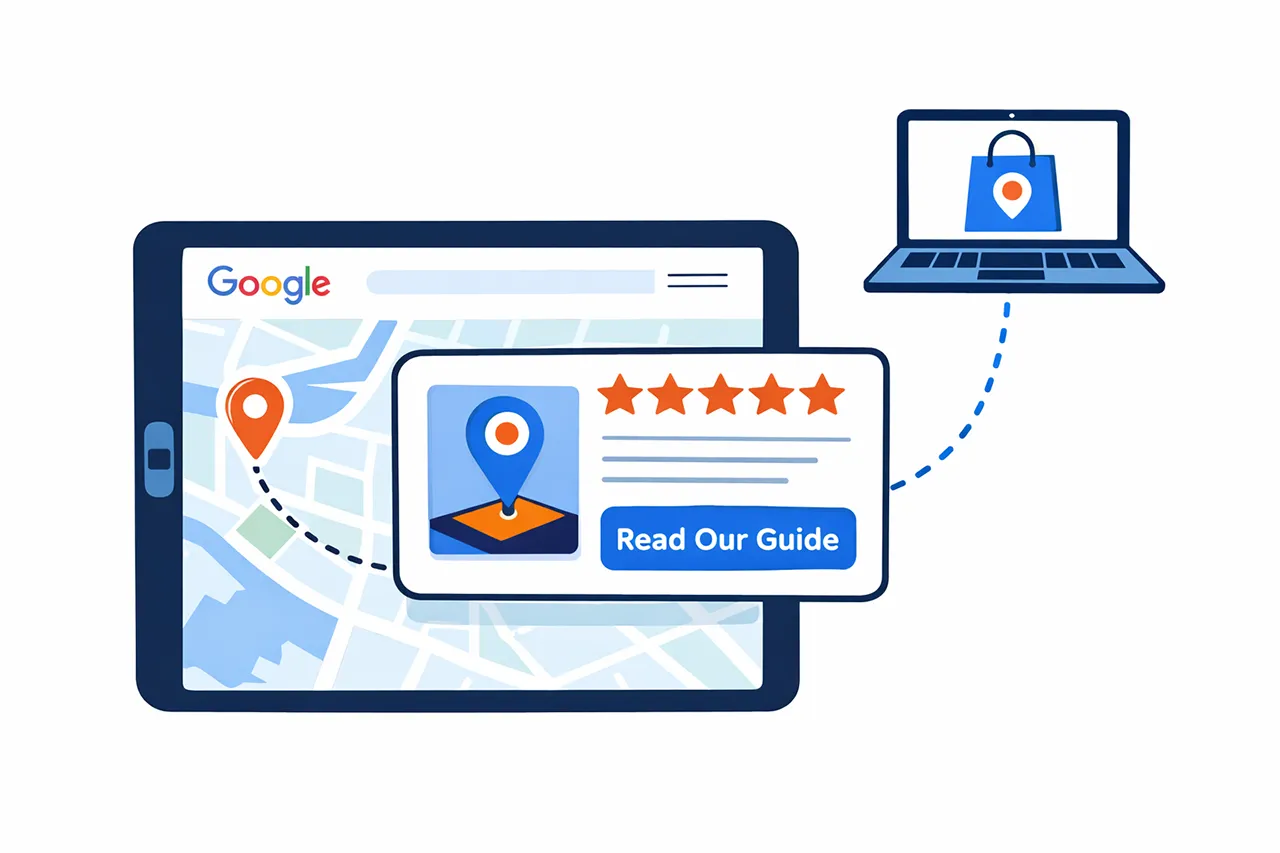
Your Google Business Profile is one of the most valuable digital assets you have as a local business.
It’s completely free to set up and use, and optimising it and gathering customer reviews there can make a major difference when customers are looking for companies like yours.
Despite this, most businesses don’t use it to its full potential.
Generating regular new content on your website gives you something useful to post there too, while also giving potential customers a reason to click through and learn more.
It also reinforces to customers that you’re active and credible, which matters when people are comparing multiple businesses on the map.
A simple content posting rhythm could be:
- Publish a helpful blog/guide
- Share it on your Google Business Profile as an update
- Share it on social media
- Link to it in an email or quote follow-up
As you can see, just one piece of content can have multiple uses – all geared towards growing your business.
6. It gives you something useful to share on social media
Social media is hard to keep up with when you’re busy with the day-to-day in your business.
Posting random updates often feels like shouting into the void, and it can be hard to know what to say beyond “Look, here’s a job I did!”
Creating website content makes social media easier because it gives you something meaningful to talk about, plus it has a purpose beyond getting likes.
So instead of posting and hoping, you’re sharing something genuinely helpful that leads people back to your website – where they can discover even more reasons to actually enquire.
For example, a single guide such as “What are the benefits of a garden office?” can be repurposed into:
- A month’s worth of short posts
- A simple image carousel
- A quick video script
- An email newsletter topic
That’s a much better use of your time than posting for the sake of posting.

7. It brings in more qualified enquiries – not just more traffic
For most businesses, just getting more traffic to your website isn’t the goal – better enquiries are.
Helpful content attracts people who are already researching, already thinking about the service, and already deciding who to contact to meet their needs.
It also sets expectations: what the process looks like, what affects price, what’s involved, and who the service is best suited for.
For example:
- A builder’s “How long does a kitchen extension take?” guide attracts people who are serious about planning
- A salon’s “What to expect at your first appointment” guide attracts people who want reassurance
- A consultant’s “How the process works” page filters out people who aren’t ready
Ultimately, this approach to content marketing should translate to fewer time-wasters and more enquiries that are a good fit.
8. It answers objections before they contact you (and saves you admin)
Most customers have the same doubts before they enquire – they just don’t always ask them directly.
Content lets you answer those doubts upfront in a calm, helpful way:
- “How much does it cost?”
- “How long does it take?”
- “Will it be messy / painful / complicated?”
- “What do I need to do before you arrive?”
- “What’s included – and what isn’t?”
The benefit is twofold: customers feel reassured, and you spend less time repeating yourself on calls and messages.
This can also ensure customer experiences are more consistent – especially if you ever worry about forgetting something or saying the wrong thing when speaking to a potential customer.
It’s like having your best sales conversation written down and working for you in the background 24/7.
9. It builds trust before the first message – especially for higher-priced services
The reality for most business websites is that many people won’t enquire on their first visit. And this is especially true if the service feels expensive, personal, or high-stakes.
Instead, they are more likely to browse, read, and try to get a feel for whether you’re the right fit for them.
That’s why content such as in-depth guides, case studies, testimonials, and clear explanations helps people build confidence in your business.
By the time they message you, they should already understand your approach and feel like you know what you’re doing – which makes the enquiry warmer and easier.
10. It helps you stand out – so you don’t compete on price
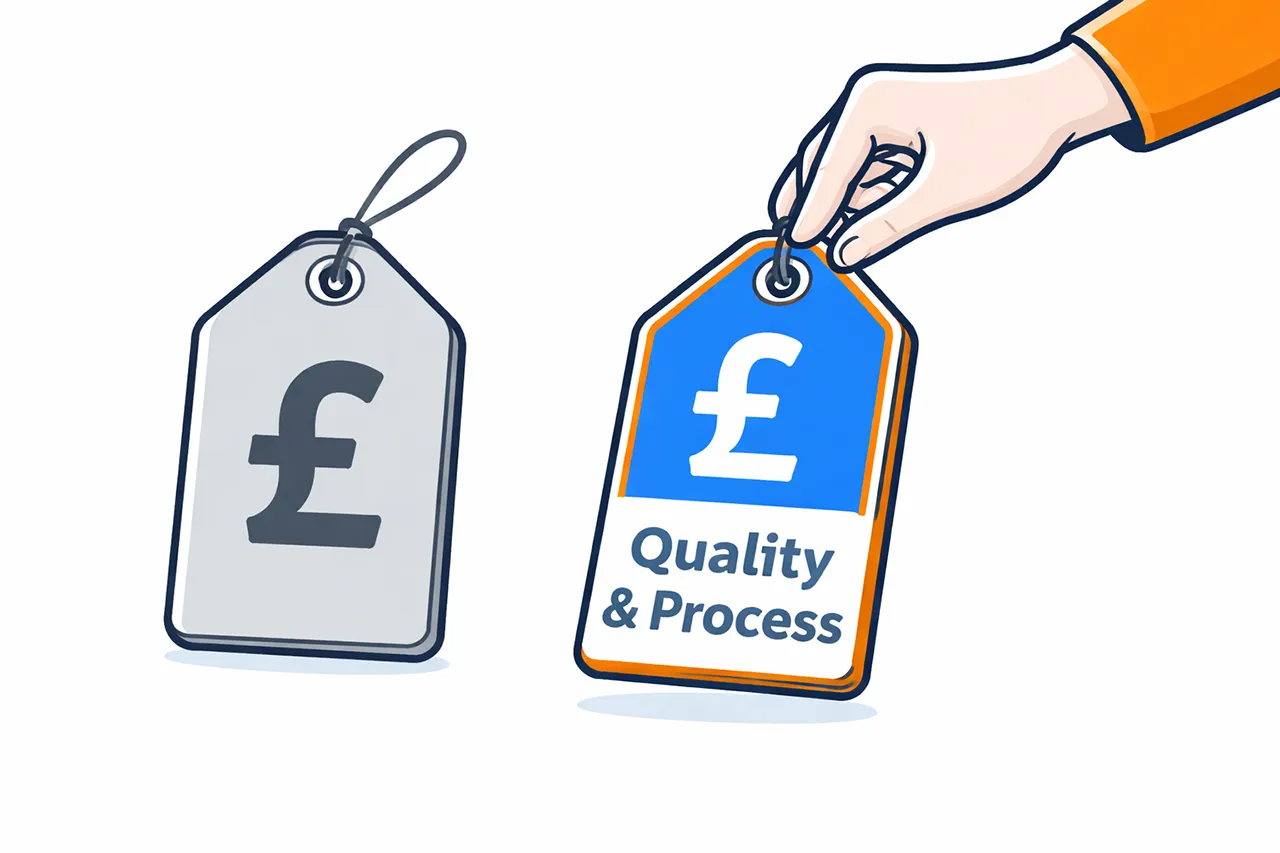
If your website only says “Here’s what I do and here’s my number”, you can easily end up compared purely on price.
Content gives you a way to clearly show the things that actually make you worth choosing: your process, standards, experience, and attention to detail.
That attracts customers who value quality and helps you avoid the headache of enquiries that only care about the cheapest quote.
Case studies and project posts are particularly strong for this because they show:
- What services you provided
- What you actually did
- What problems you solved
- What results were achieved
- What makes your work “good”
11. It supports conversions on your key service pages
It’s important to note that content isn’t just there to help your local business rank well on Google – it should also guide people to the next step.
Most customers need a journey:
- Arrive with a question or problem
- Receive reassurance and clarity
- Decide on a clear next action
Content marketing provides that journey and links naturally into the pages that convert – i.e. your service pages, booking page, or contact form.
Here’s a simple two-way habit that works:
- Each blog post should link to the relevant service page
- Each service page should link to related guides or FAQs
That keeps people on your website for longer, builds trust, and improves conversion rates.
12. It builds topical authority – which boosts your whole website over time
Google tends to trust websites that show depth of knowledge and expertise, not just one page trying to cover everything.
A growing library of related content helps your website look like a genuine specialist, rather than a generalist with a template site.
Over time, this can drastically boost your SEO and lift your whole website (not just the individual blog posts), because it becomes clearer what your business is known for.
In plain terms: content helps your website earn a reputation online.

13. Evergreen content keeps working while you’re busy
One of the best things about content marketing on your website is that it keeps working for your local business 24/7, 365 days a year.
Unlike social media posts, it doesn’t disappear into the ether after a day or two. A solid, in-depth guide can bring in traffic and enquiries for months or even years, especially if you refresh it occasionally with up-to-date information – e.g. latest pricing, products, or process changes.
Great evergreen content ideas will vary depending on what your business does, but typically include:
- “How to prepare for [service]”
- “What it costs and why”
- “Common mistakes to avoid”
- “What to expect during the process”
- “How to choose the right option”
For time-poor business owners – which, let’s face it, is most of us – that “publish once, benefit for ages” value is huge.
14. It creates opportunities for backlinks and local PR
People will rarely link to standard service pages on a business’ website – but they do link to genuinely useful resources.
Helpful content gives both current and potential customers – as well as suppliers, community websites, and local media – something worth sharing.
Those links not only boost SEO, but they also put your business in front of new audiences in a natural, non-salesy way.
Some examples include:
- A boiler safety checklist shared by a local community group
- A “Guide to…” linked by a supplier or customer helping a friend
- A local community newsletter referencing a helpful seasonal article
15. Demonstrating real experience and proof strengthens trust signals
Customers need proof to feel confident that contacting you is worth their time; they want to see you’ve done the work before and that you understand exactly what you’re talking about.
Content marketing helps you show that in a way that feels helpful, rather than braggy:
- Case studies with real outcomes
- Project posts with context
- Before/after examples (where appropriate)
- Guides that show you understand the detail
Even simple “Here’s what we did and why” posts build huge trust.
16. It can help you attract better staff, subcontractors, and partners
A strong website doesn’t only attract customers to your business. It can also appeal to the right people you want in and around your business – i.e. staff, subcontractors, collaborators, and partners.
When your website illustrates the business’ professionalism, standards and expertise, it makes good people more likely to want to work with you.
This is especially useful for trades and growing service businesses where reliability matters.
17. It gives you endless marketing material to repurpose – saving you invaluable amounts of time
If marketing makes you feel like you’re on a treadmill with no stop button, content marketing is one of the best ways to ease the pressure.
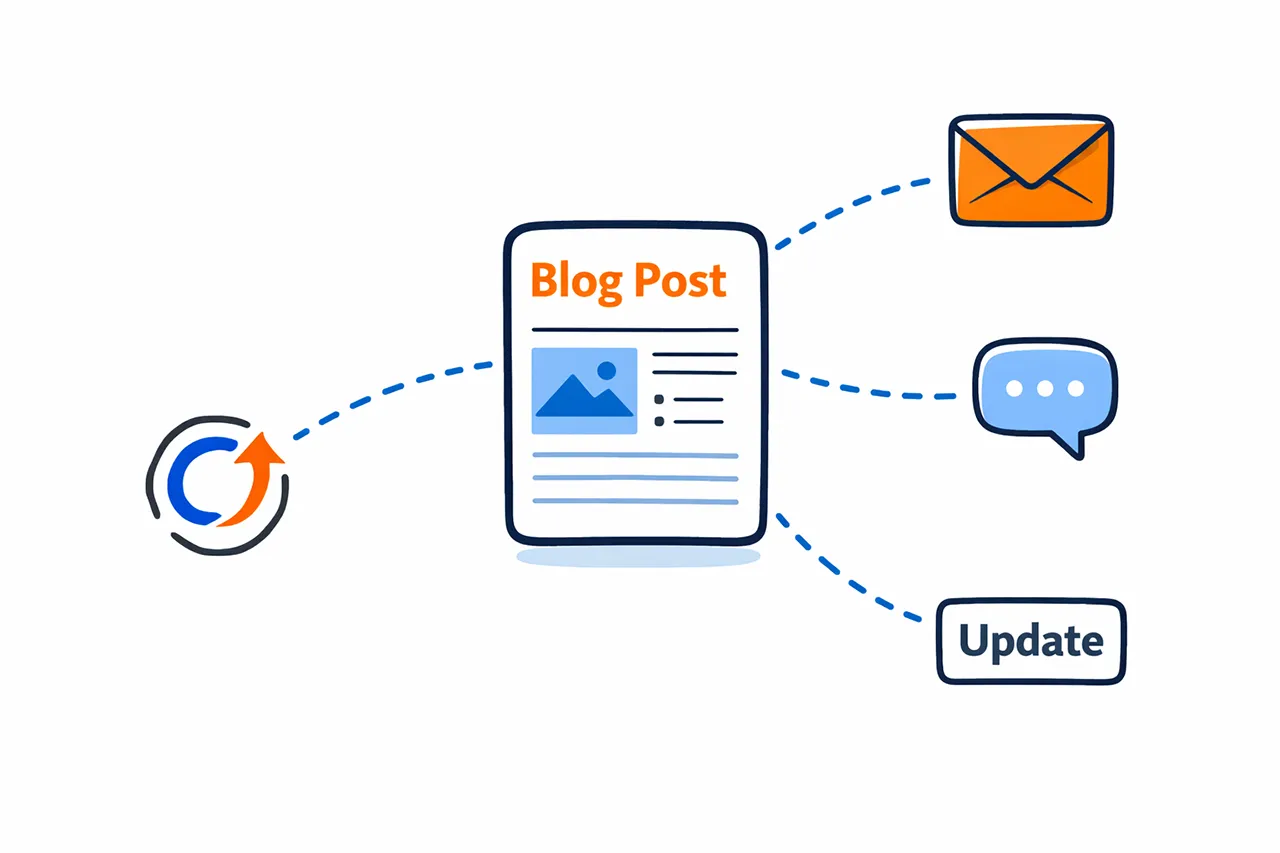
Instead of trying to invent new ideas every week, you can create one solid piece and reuse it in multiple formats.
For example, a blog about a new service you offer could be turned into:
- A dedicated new service page
- Social media posts
- A Google Business Profile update
- An email newsletter
- The basis for a new guide about that service
That turns content into a time-saver, not a time drain – while simultaneously helping to keep your messaging consistent everywhere.
18. It helps protect you against social media platform changes (algorithms, reach, paid ads costs)
If you currently dedicate a lot of time to social media, be wary that social platforms change constantly.
For example, algorithm changes can cause your reach to drop and lead to a notable drop in enquiries. This might mean you end up spending more money on sponsored posts trying to win those customers back.
In short, you’re always at the mercy of someone else’s platform.
Website content is different because you own it.
The more useful content you publish on your own website, the less vulnerable you are to those changes. This should mean your lead flow becomes more stable over time.
19. It increases customer lifetime value (repeat business and referrals)
Content marketing isn’t just about attracting new customers; it can also keep existing customers coming back.
Whether it’s helpful reminders, aftercare guides, seasonal checklists, or “when to book again” advice, well thought-out content marketing can lead to a significant uplift in repeat business.
Additionally, this makes referrals easier because your customers can share your guide with a friend.
20. It helps you expand into new services or new areas
Want more work in a nearby town? Keen to better promote a higher-priced service?
Content marketing is one of the safest ways to do it: you can build relevance gradually, without changing everything overnight.
A few focused posts and case studies in the direction you want to grow can start attracting the right type of enquiries over time.
This means your website becomes a tool that supports your goals, not just your current workload.
What type of content should you start with?
My personal advice? If you’re starting from scratch, don’t overcomplicate it.
Simply start with content that directly supports enquiries.
Most local businesses and clients of mine do well with this order:
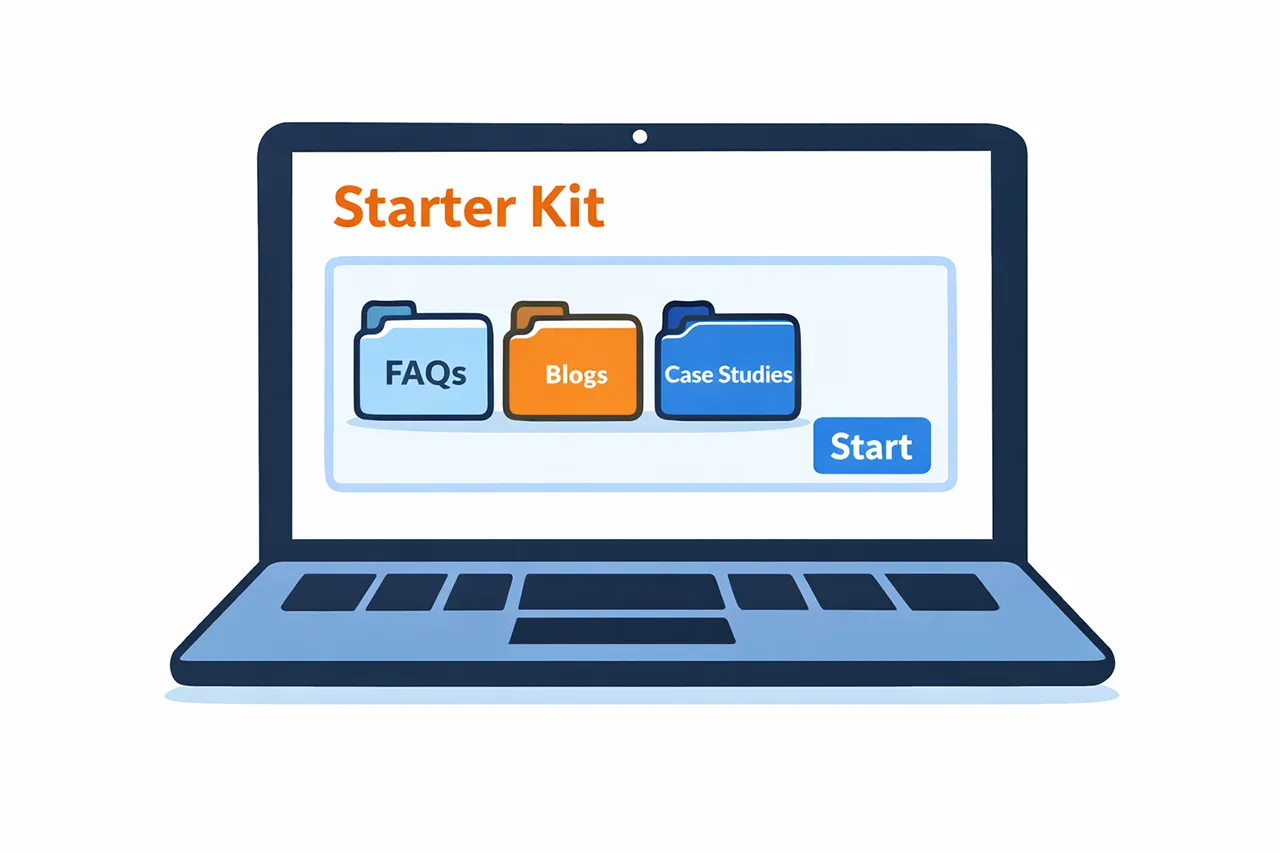
- FAQs that answer real questions (e.g. costs, timescales, what’s included)
- 3–6 helpful blog posts focused on common customer questions
- 3–5 case studies or project posts to build proof fast
- One evergreen guide that becomes a cornerstone page on your site
This should give you a solid base of content from which to build on over time.
How often should you publish content?
There’s no single hard and fast rule – every business’ goals and resources are different – but here’s a realistic approach if you are considering getting started with local business content marketing:
- Starter: 1 quality post per month
- Growth: 2 posts per month
- More competitive niches: 3–4 posts per month, including a mix of short and long articles
As I said at the start of this guide, you don’t need to do everything right away – so try not to feel overwhelmed.
The key is consistency: a steady trickle of useful content is how websites grow without burning you out.
What makes content good for SEO and real people?
The best content marketing for local businesses does two things:
- Answers customers’ questions or concerns properly
- Nudges the reader towards the next step
Think of good content like a helpful conversation: it answers the question clearly, proves you know your stuff, and makes the next step obvious.
With that in mind, here are a few simple rules to follow when producing content:
- Write for customers first and foremost
- Answer the question near the top of the page so users aren’t scrolling around in frustration
- Explore the topic in further detail with dedicated sections
- Use headings so it’s easy to skim-read
- Keep paragraphs short and clear
- Include real examples of your work where possible
- Link naturally to relevant service pages to guide customers (and Google)
- Make it as localised as possible where it makes sense to do so
Why content marketing is one of the best long-term investments your local business can make
If your website is a business asset, content is what makes that asset grow.
Publishing quality content regularly helps you:
- Get found
- Build trust
- Stand out from competitors
- Turn more visitors into genuine enquiries
- Avoid reliance on social media and paid ads
And the best part is it builds over time: each helpful post you put out is another doorway into your business for customers.
Do you want content that actually brings in enquiries?
If content marketing is something you’d like to explore for your business, drop me a message.
I’ve spent years creating and managing content for over 70 local and nationwide businesses, so I know what it takes to produce content that’s genuinely useful, easy to read, and designed to perform in search.
My focus is always the same for every client: create content that answers real questions, supports SEO, and helps turn website visits into enquiries.
Whether you need blogs, guides, case studies, project posts or landing pages, I can help you grow your website with a simple, sustainable content plan based on:
- Your business goals (more enquiries, better quality leads, specific services you want more work in)
- The questions your customers ask all the time
- What people are searching for locally in your area
There’s no jargon, no guessing, and no fluff – just consistent, high-quality content that builds trust and helps your business get found.
If you’d like me to recommend a sensible starting point, get in touch – tell me what you do and where you want more work from, and I’ll suggest a simple content plan.