

At a glance
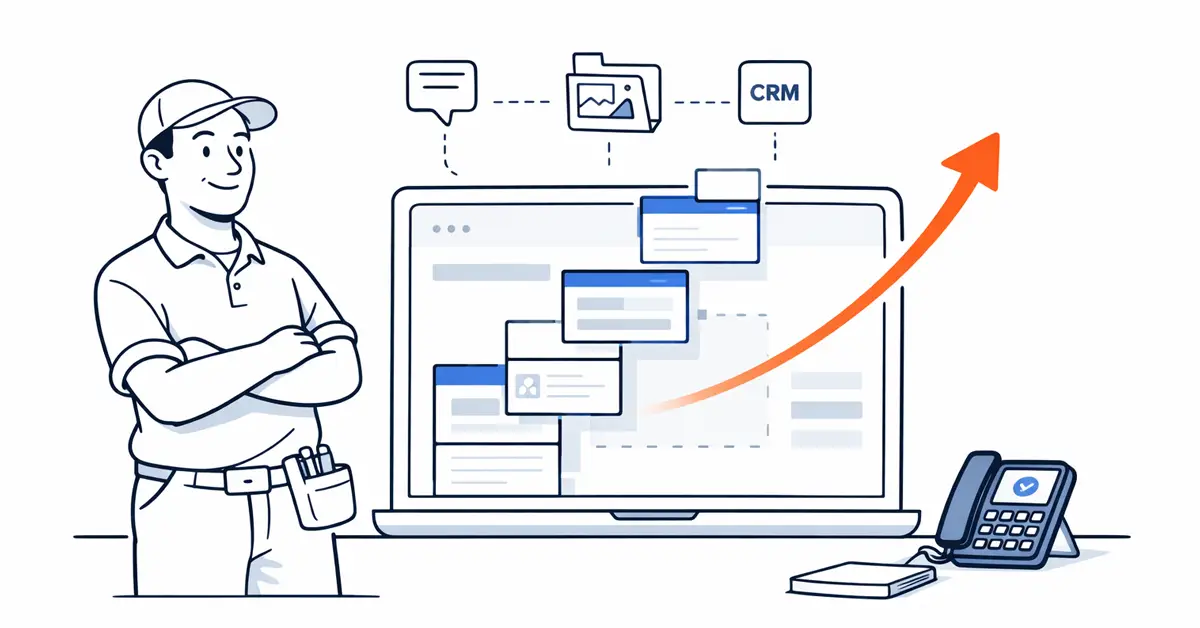
- Start small, grow later: A bespoke website can launch with the essentials, then expand as your business grows without needing a full rebuild.
- Built to scale: A flexible structure makes it easier to add new services, pages, and features over time.
- Better for enquiries: As your site grows, it can help bring in better quality leads with clearer service pages, stronger trust signals, and smarter contact options.
- Supports local SEO: A well-structured website makes it easier to build visibility in local search as you add content, portfolio work, and areas covered.
- More cost-effective long term: Building on solid foundations is usually far more affordable than paying for a full rebuild later.
- A stronger business asset: A scalable website grows with your business and stays useful, relevant, and easier to manage over time.
When you’re first starting out with getting your business online, a simple website is often exactly what you need.
A clear homepage, services page, and a contact page can be enough to get enquiries coming in – especially if most of your work is currently coming through other sources, such as referrals, Facebook groups, Checkatrade, word of mouth, or networking.
If you’ve already got a few photos of your work, a small gallery helps too – but it’s not essential on day one.
But here’s the bit that trips a lot of local businesses up: they build a “starter website” that’s fine for today… but awkward (or expensive) to grow later.
Now imagine it’s a year or two down the line: the business is doing well, your services have expanded, and suddenly the website needs to work harder for you.
You might want to break services out into their own pages, properly show off recent work, start content marketing to support local SEO, or integrate tools that save you admin time. And often, the goal shifts too – it’s not just “more enquiries”, it’s better enquiries.
But if the site wasn’t built to scale, it can feel like the only option is a full rebuild – and another headache to deal with.
This guide is here to reassure you that a bespoke website doesn’t have to be big on day one – it just needs the right foundations.
This is especially useful if you’re a local service business and you’re starting small now, but you want the website to support you as you add services, refine your offers, or expand into nearby areas.
And with those foundations in place, your website can grow hand-in-hand with your business, without ripping everything up and starting again.
What actually is a bespoke website?
A bespoke website isn’t just a fancy way of saying “a website that looks nice”.
It’s actually a website built around your business, rather than you having to squeeze your business into a fixed template.
For my clients, that’s a bespoke WordPress website – because it’s flexible, scalable, and you’re not locked into a closed platform.
Practically, that means the site is designed with your goals, services, and future plans in mind – and built in a way that makes it easy to extend later.
It doesn’t mean you need to have a massive website from day one – it just means you’re not boxed in when you’re ready to grow.
In other words: you can launch with the essentials now, and build on it later.
Why scaling a website matters – even if you’re small right now
Scaling doesn’t always mean becoming a huge business.
For most local service businesses, growth looks more like refining and expanding: adding a new service, specialising, moving into better-paid work, covering new areas, and improving the quality of enquiries.
Your website is usually the one place potential customers visit before they decide whether to get in touch.
Even if they found you through places like your Google Business Profile, Instagram, a directory, or word of mouth, they often check out your site to confirm you’re the real deal.
A scalable website lets you make improvements as you learn what your customers actually care about – without paying for a new site every time your business takes a step forward.
What a scalable website structure looks like
If you’re starting with something small, it helps to picture what the website could look like later – even if you’re not building it all today.
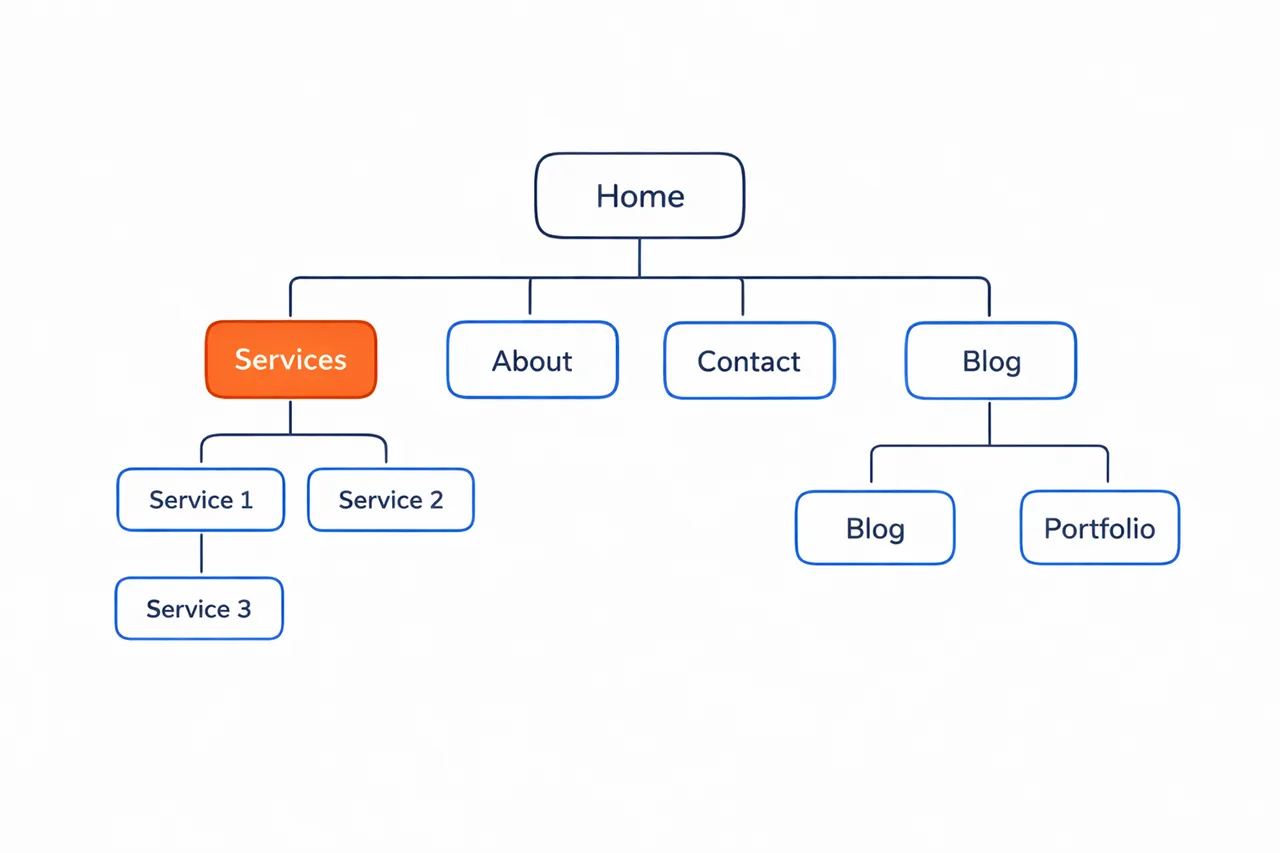
For most local service businesses, a scalable structure is usually:
- Home (clear offer, areas covered, trust signals, next step)
- Services (overview page)
- Individual service pages as you grow (one page per key service)
- Areas covered (optional now, useful later)
- Portfolio / case studies (add when you’ve got a handful of examples)
- Blog / advice (add when you’re ready to build visibility)
- About (trust builder)
- Contact (multiple easy options)
The key is that each section has a “home” – so when you add something later, it has a logical place to live.
Now let’s look at the ways and benefits of having a website that scales alongside your business.
Quick note: this approach is especially helpful if you want to grow steadily over time – not necessarily become “massive”, but to add services, improve lead quality, and build stronger visibility locally.
1. Add new services without breaking the site
This is one of the most common “I need to expand my website” moments I see – and it’s where a lot of starter sites start to creak.
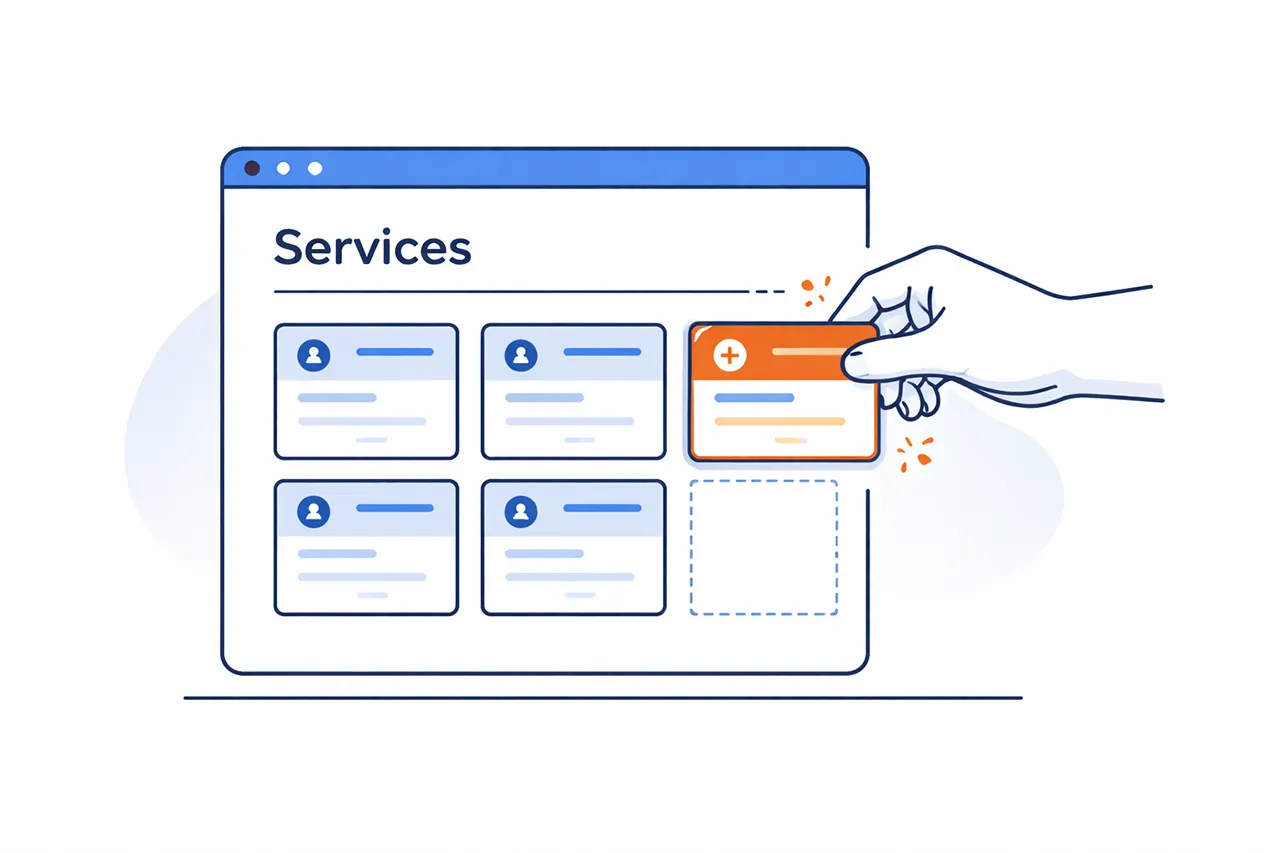
Often a client starts with a single broad services page, then as the business matures they want to split that out into more specific pages.
For example, a plumber might begin with a “Plumbing services” page, but later wants separate pages for boiler installation, emergency call-outs, landlord certificates, and bathroom fitting.
Perhaps a beauty business might start with “Treatments”, then later add dedicated pages for lash extensions, massages, and bridal makeup.
On a website that isn’t built to scale, this is where things get messy: services get crammed into one long page, navigation becomes confusing, and the site turns into a patchwork of add-ons that don’t complement each other or help the business rank any better on Google.
With a bespoke website, this expansion is expected; the structure is planned so new service pages slot in naturally, without disrupting the rest of the website.
A strong service page also gives you space to include the bits that help people decide, like:
- What’s included (and what isn’t)
- Typical timeframes
- Pricing guidance (even if it’s “from” pricing)
- FAQs and common objections
- A few relevant photos or examples
That helps customers find exactly what they need, and it helps Google understand the specifics of what you offer.
As you build these pages out, linking between them (service pages ↔ portfolio posts ↔ blog posts) helps Google understand the relationship between your content – and it helps customers find the next thing they need.
2. Keep costs down as you grow – because you’re building on solid foundations
This is one of the most practical benefits of a bespoke website – and it’s easy to miss when you’re focusing on design or SEO.
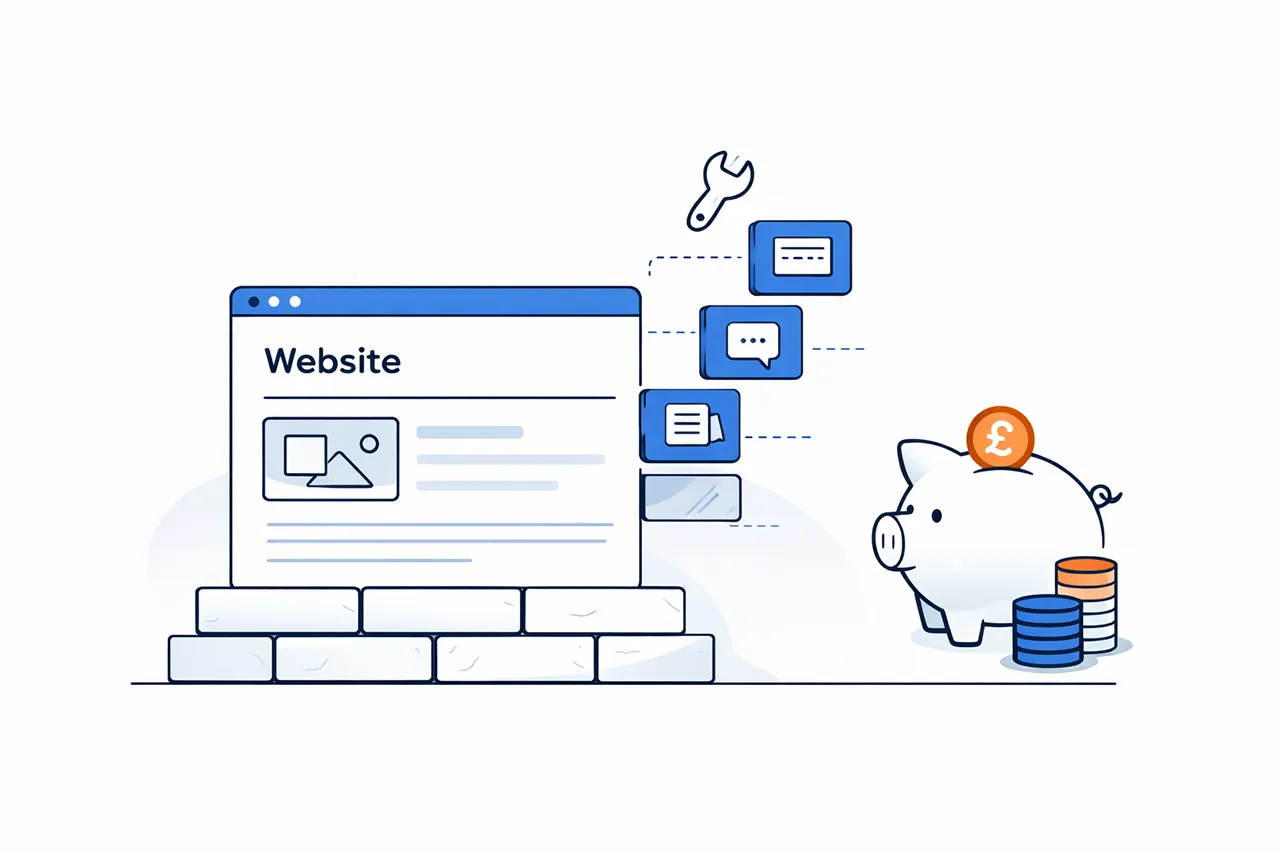
When your website has strong foundations (structure, templates, styling, navigation, and a clean back-end setup), growth becomes a series of smaller, more predictable upgrades – rather than big, expensive “start again” projects.
Think of it like moving into a house that’s been built properly; you can redecorate, extend, add storage, upgrade the kitchen – but you’re not repairing the foundations every time you want to improve something.
With a scalable bespoke website, adding things later is usually more cost-effective because a lot of the heavy lifting is already done:
- The design system already exists, so new pages don’t need designing from scratch
- Page layouts can be reused (and tweaked), which speeds up adding new services
- Navigation and internal linking can be extended logically, rather than reorganised from scratch
- Features like a blog, portfolio, FAQs, WhatsApp buttons, chat tools, or CRM integrations can be added into a site that’s already structured to handle them
Compare that to a website that wasn’t built to scale. These sites often hit a wall, where every new page feels like a workaround and every new feature creates a knock-on problem.
That’s when people end up paying for a full rebuild sooner than they expected.
3. Keep new pages consistent – so everything still looks professional
One underrated benefit of a bespoke website build is consistency.
When your site uses reusable layouts and styling rules, adding a new page later doesn’t feel like “starting again”. Instead, it’s using the same framework, with new content.
Essentially, you don’t end up with one page that looks polished and another that looks like it was added in a hurry.
That consistency matters more than people realise; it keeps the site feeling professional, makes navigation easier, and it subtly builds trust.
This is also where scaling your website becomes faster (and cheaper) over time. If there’s a proven structure for service pages, portfolio posts, and blog articles, you’re not reinventing the wheel every time you add something new – making scaling the website far easier to do.
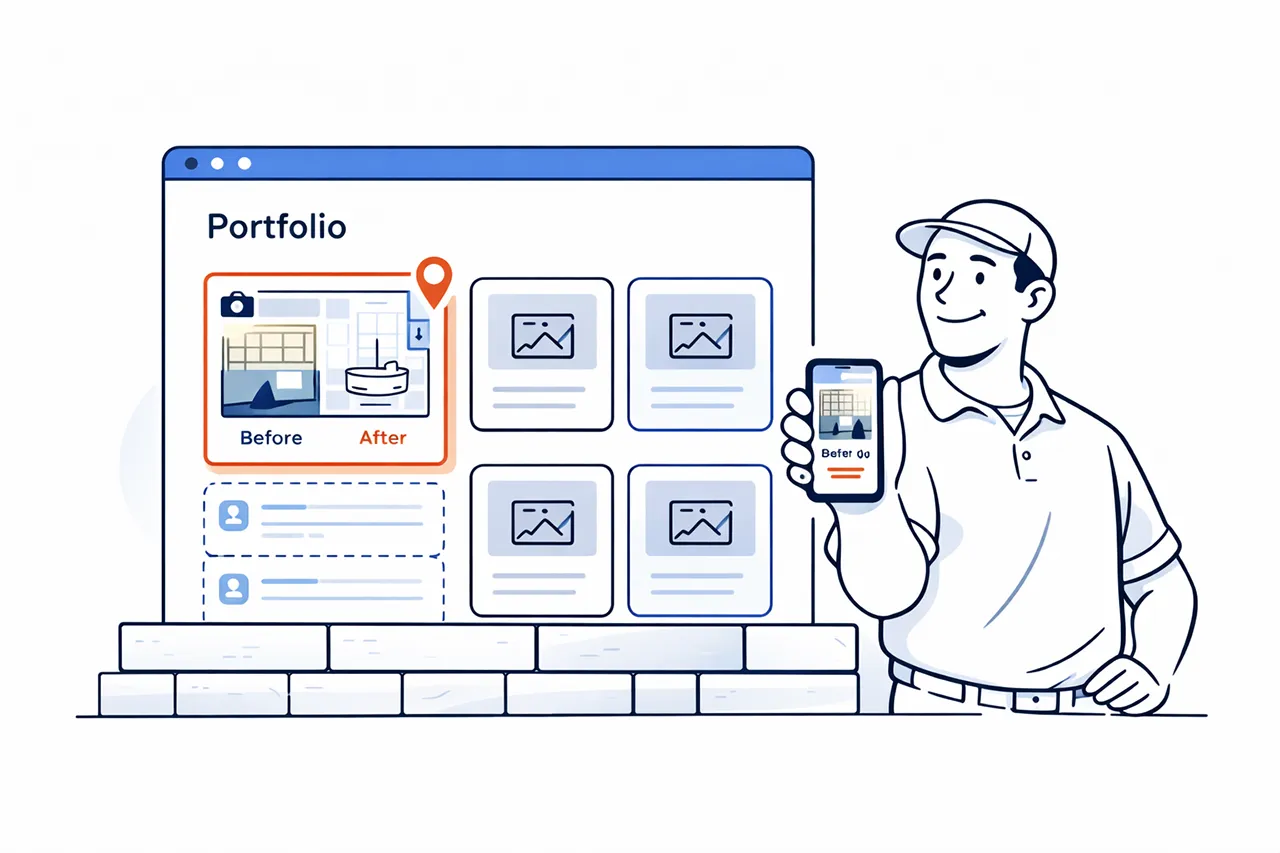
4. Show off your work with a portfolio or case studies when you’re ready
Lots of businesses launch without a portfolio on their website – often because they’re either busy, don’t have many photos/examples yet, or feel they need lots of content to start with.
But the reality is you don’t.
Once you’ve got even a handful of strong examples, a portfolio (or case study) section becomes one of the most trust-building parts of your site.
It shows proof, not promises – and it helps people picture what it would be like to work with you.
Having a bespoke website makes it easy to add this later in a structured way. You can organise work by category (e.g. service type), tag by location, and link each example back to the relevant service or “areas we cover” page.
This translates to customer trust and very useful content for local SEO. Done properly, this can become a serious growth engine for generating enquiries on your website.
- Find out more about this in my dedicated guide: Portfolio posts for local SEO: 14 benefits that help you rank locally and win more enquiries
5. Use a blog to build visibility and trust
Blogging can be a really powerful tool for your business to have online.
On a scalable website that’s been built with this potential in mind, adding a blog after launch shouldn’t be a major project. Rather, it will be a straightforward add-on that fits your site structure and supports your services.
Staying on top of a blog section can feel like just another thing you need to manage as a business owner – but you don’t need to let it overwhelm you.
The goal isn’t to post every week. For most local businesses, a far better approach is to publish the kind of posts that answers real customer questions, reduces friction, and saves you time.
For example, you could post content that:
- Clarifies costs and what affects pricing
- Explains timelines and what to expect
- Answers common “Should I…?” or, “How does…?” questions
- Helps customers feel confident before they enquire
You can build a small library of genuinely useful posts over time and link relevant ones to their respective service pages.
That combination – helpful blog posts + strong service pages + real work examples – is a very steady way to improve visibility locally.
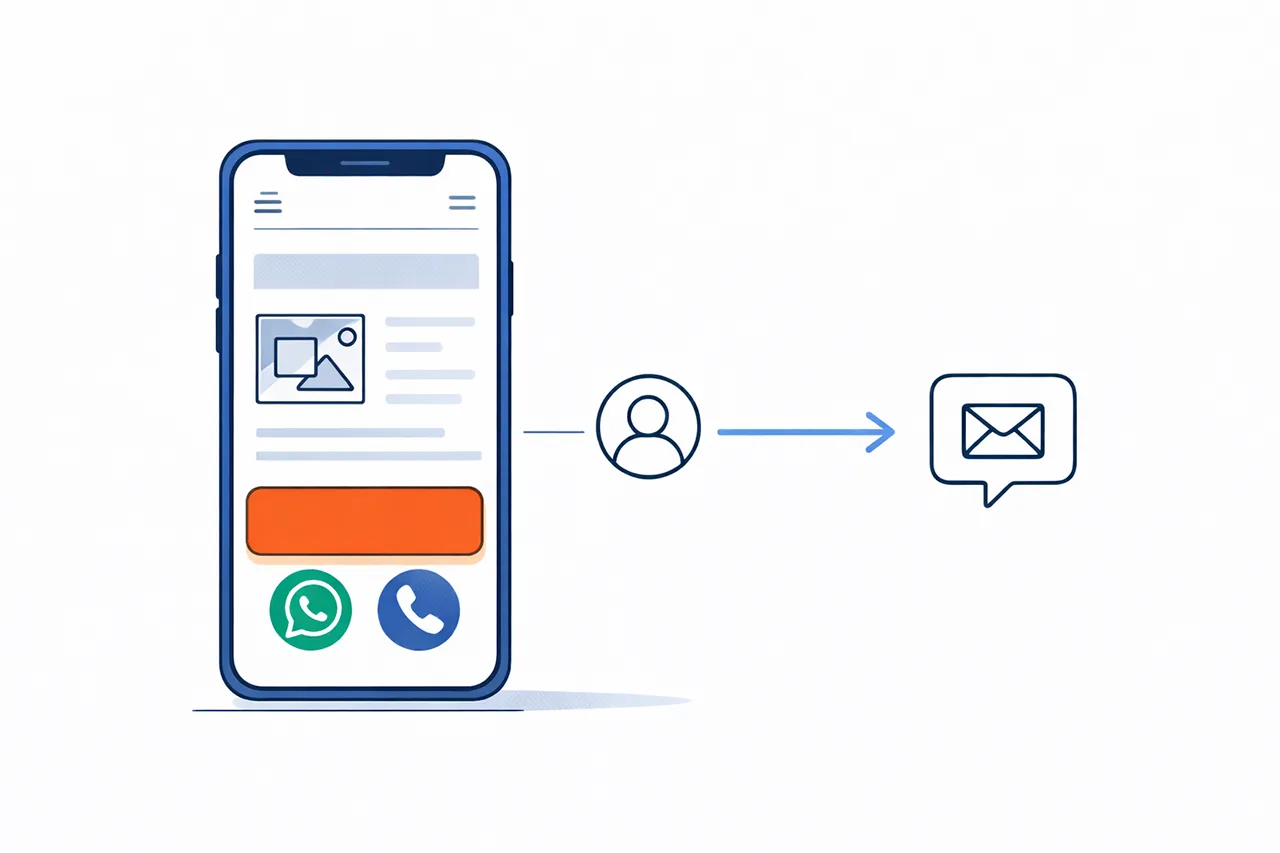
6. Improve enquiries with simple conversion boosters
If you’re getting started with just a basic website, a phone number and a form might be all the contact methods you need to have.
But as your business grows and enquiries increase, it’s likely you’ll want to reduce the back-and-forth and make it easier for people to contact you quickly – especially on mobile.
That’s where small but powerful conversion features can make a surprisingly big difference.
A scalable bespoke site makes it easy to add things like a WhatsApp button, click-to-call buttons, a sticky “Get a quote” button on mobile (so the button stays visible as they scroll), or smarter enquiry forms that gather the right info upfront.
For certain businesses, it can also mean adding photo uploads (“Show me the issue”), or a simple “Request a callback slot” system so you’re not wasting time calling at the wrong time.
None of these are gimmicks when they’re used sensibly. They’re time-savers that improve lead quality.
7. Connect your website to a CRM – and reduce admin as leads increase
At the start, managing enquiries through your inbox may work just fine.
But when the business grows, that approach may start to become too much to stay on top of.
Messages get missed; replies get delayed; follow-ups don’t happen; and it becomes hard to track who’s at what stage.
A bespoke, designed-to-scale website can integrate with a customer relationship management (CRM) tool (a system that keeps your leads organised), or simple automation tools so enquiries go into one organised system.
You can tag leads by service, send confirmation emails automatically, and even build in light-touch follow-ups – which is often the difference between winning the job and losing it to someone who replies faster.
Even simple CRM setup can help you:
- Reply faster (without living in your inbox)
- Track who’s waiting on what
- Follow up consistently
- Spot which services bring the best leads
This doesn’t mean turning your business into a robot, by the way. It simply means your website can help support growth, rather than adding stress along the way.
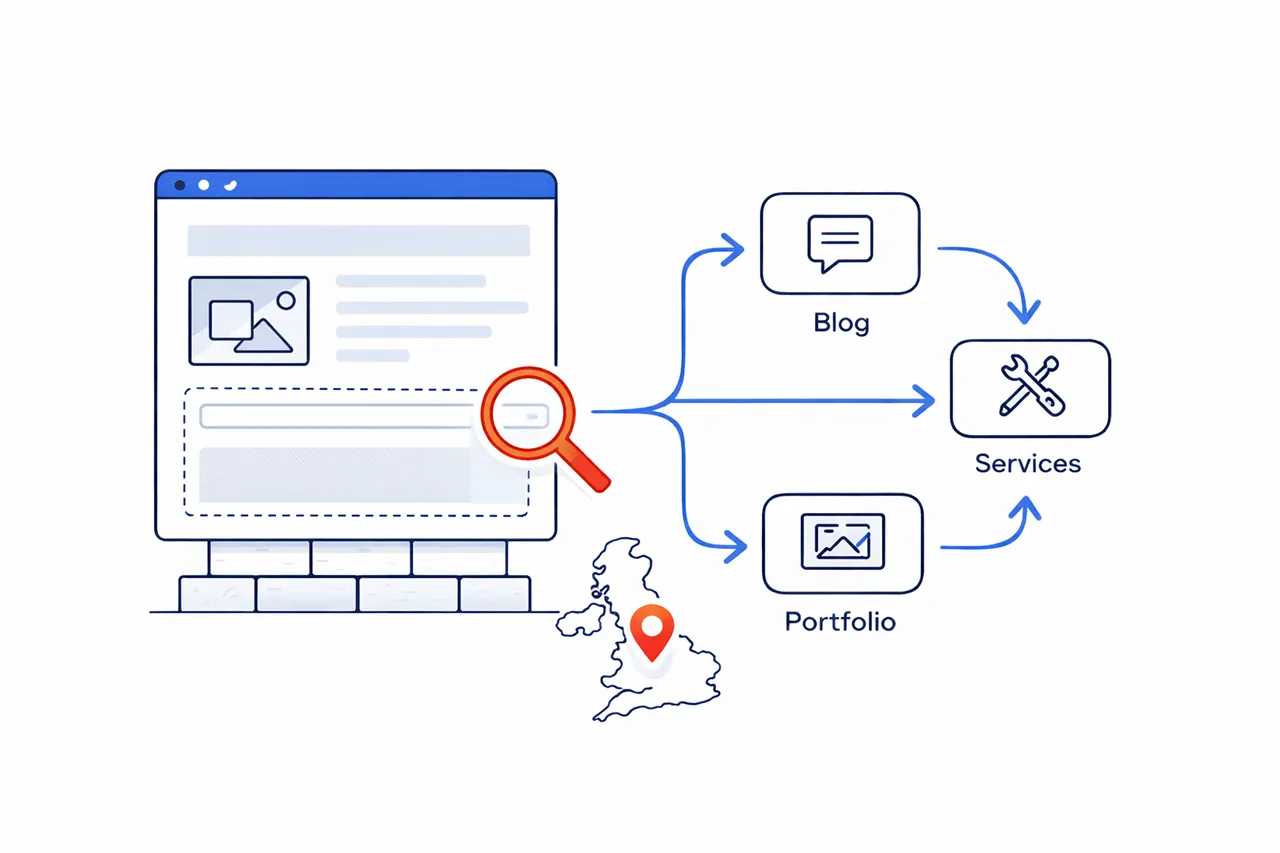
8. Grow your local SEO without “bolting it on” later
As your services expand or you start covering new areas (say from Bexleyheath into Sidcup, Dartford, Bromley, or further across Kent), you want your website to be able to reflect that cleanly.
That matters because local searches are often specific – people type things like “boiler servicing Sidcup” or “wedding makeup Kent”, not just the broad service.
A bespoke website gives you the building blocks to scale efficiently: a logical page hierarchy, clean URLs, strong internal linking, and the space to add content that genuinely helps users.
Internal links are basically signposts – they help customers (and Google) move from a blog post or portfolio example to the service page they actually need.
It also makes it easier to maintain site speed, mobile usability, and technical foundations that matter for search engine optimisation (SEO).
There’s also a big long-term advantage to be enjoyed here: when the structure is solid, each new page strengthens the whole website, rather than diluting it.
9. Evolve your branding and messaging without a redesign
This is a big one, especially for newer businesses.
In the early months or even years, you might not have the perfect photos, the clearest positioning, or the strongest testimonials.
That’s normal – your brand will sharpen as you gain confidence and experience.
A scalable website lets you refine things over time: upgrading photos, adding reviews, tightening up your messaging, and presenting more clearly who your business is for and what you specialise in.
That’s very different from being stuck with an off-the-shelf template that only works if you keep everything exactly the same.
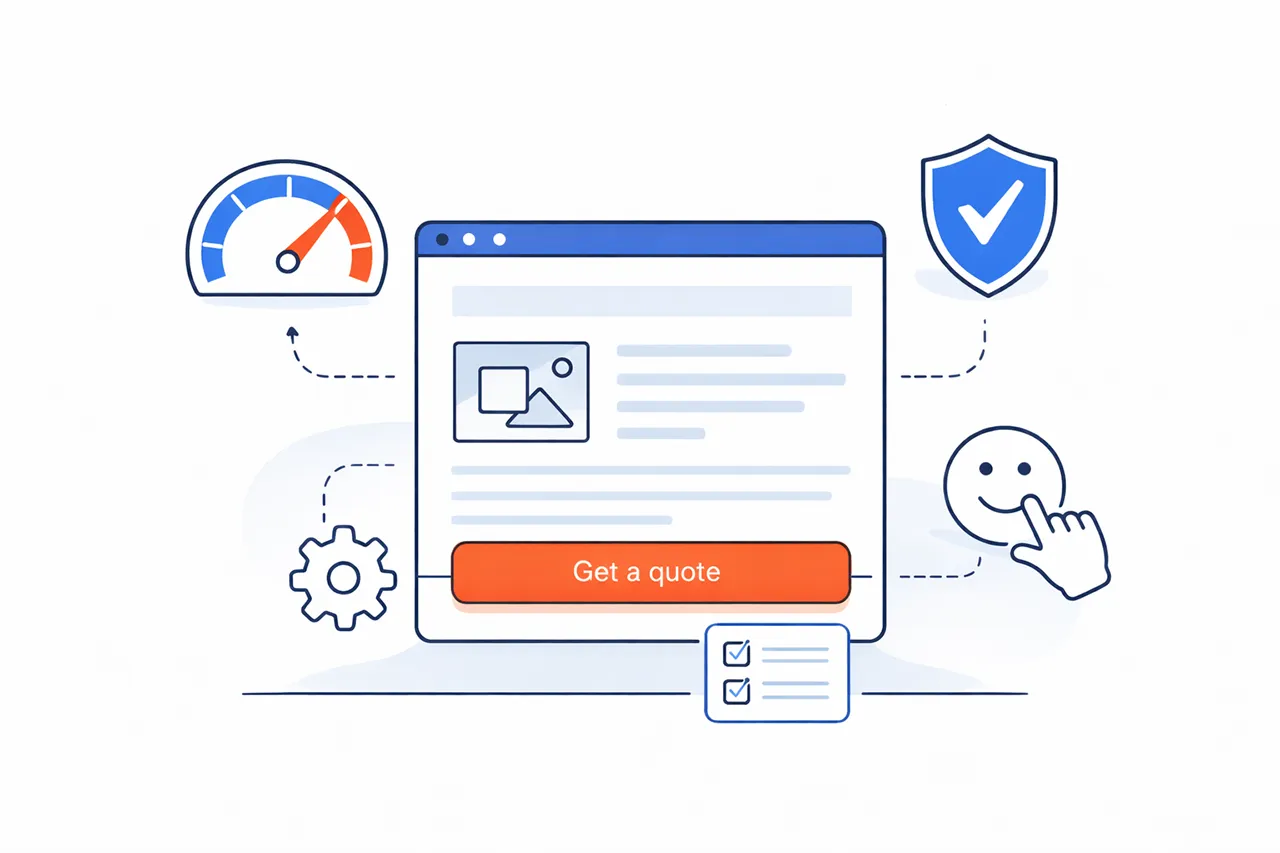
10. Stay fast, secure and user friendly as your site expands
Scaling isn’t just about cramming more stuff on your website. It’s also about ensuring reliability.
As your business grows, your website becomes increasingly important – and that’s typically when problems like slow load speeds, plugin conflicts, and neglected updates start to bite.
A well-built bespoke site is easier to maintain because it’s organised, supported properly, and designed with performance in mind.
It also tends to be easier to keep accessible and user-friendly – such as clear headings, readable text, good contrast, and a mobile-first layout.
That means more people can use it comfortably – and fewer people bounce because they can’t find what they need quickly.
Common mistakes that stop websites scaling
Most website scaling issues aren’t caused by bad luck – they come from predictable problems.
The most common ones I see are:
- Choosing a DIY platform that locks you in or makes changes awkward
- Building without a clear structure (so everything ends up crammed on to one page)
- Bolting on random features without thinking through the customer journey
- Focusing on “doing SEO” too early and creating lots of thin, repetitive pages
- Leaving the site untouched for years, then being forced into a rebuild
For the vast majority of businesses, it’s much better to build a site that’s genuinely useful, then expand content and pages as you learn what customers ask for and the key areas you want to target.
A simple “start small, scale smart” plan
If you’re starting with a small site, this kind of phased approach is usually the sweet spot.
Phase 1: Launch lean
A focused site that does the basics well: clear services, clear contact options, and a homepage that explains what you do and who you help.
Phase 2: Strengthen trust
Add testimonials, improve service detail, and start adding a few examples of your work (remember, you don’t need loads to make it effective).
Phase 3: Build visibility
Publish one genuinely helpful piece of content per month, add FAQs to key pages, and improve internal linking so the site is easier for users (and Google) to understand. Consistency matters more than volume.
Phase 4: Systemise and scale
When you’re ready, increase useful content production, add smarter lead capture/booking options, CRM integration, and whatever features support your workflow and growth.
This way, your website evolves based on what’s working – not what you feel you “should” have.
Who this approach is for (and who it isn’t)
This approach is ideal if you’re starting small but you want your website to grow with you.
It suits businesses that plan to add services, expand into new areas, refine their offers, and build a steady flow of better enquiries over time.
It might be less relevant if you only need a temporary online presence for a short-term project, or you’re genuinely happy staying at the same size with no need for more work.
Although even then, having a simple site you own is usually good peace of mind.
Final thoughts
If you’re starting out with a small website for your business, don’t worry – you’re not necessarily being left behind, you’re being sensible.
The goal isn’t to launch with a massive website you’ll never finish.
A scalable bespoke site lets you launch with the essentials, then add the next best thing when the time is right – not all at once.
This helps ensure your website stays relevant and sustainable, and that you’re not spending lots of money you don’t need to be at that particular stage of your business’ development.
It’s an approach I help many clients with. If you’re wondering what a bespoke website could achieve for your business long term, drop me a message with what you do and where you’re based and I’ll suggest a sensible “start small, scale smart” website structure you can grow into.